 KPOP
2nd generation · SM Entertainment
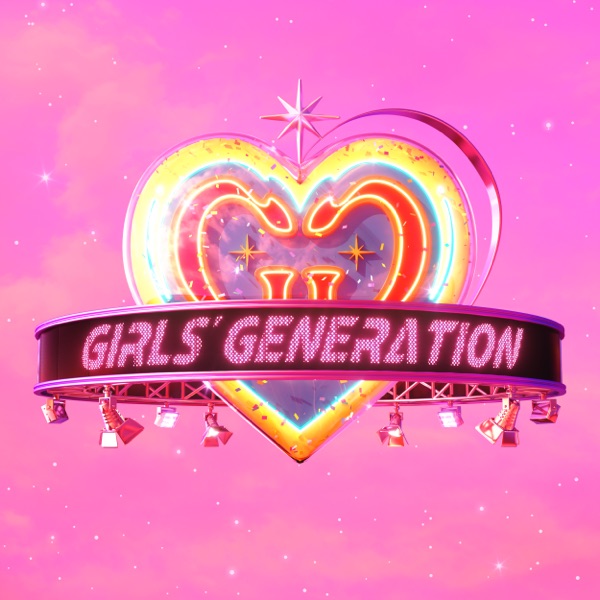
Girls' Generation
ショウジョジダイ / ガールズジェネレーション / 소녀시대
Girls' Generation set the template later girl groups were measured against: clean melodies, wide synchronised dance, and lyrics that reach for something hopeful.
- 2007DebutAug 5, 2007
- 8Members
- 2thGeneration
- SONEFandom

Last updated:
01
In 30 seconds: Girls' Generation
Gee and Genie turned them into a household name, I Got a Boy pushed song structure and video into stranger territory, and a separate Japanese catalogue runs alongside the Korean one.
Start here if you want the second-generation foundation that most later Korean pop still answers to.
02
Key facts
- Group name
- Girls' Generation
- Reading / Hangul
- ショウジョジダイ / ガールズジェネレーション / 소녀시대
- Company
- SM Entertainment
- Debut date
- August 5, 2007
- Days active
- 7,027 days (19 years, 2 months)
- Debut song
- Into the New World
- Generation
- 2nd generation
- Fandom name
- SONE(ソウォン)
03
Member guide


Profile comparison
| Members | Birth date | Blood type | MBTI | Nationality | ||
|---|---|---|---|---|---|---|
| テヨン | 1989-03-09ⓘ | 37 | 160cm | A | INFJ | South Korea |
| サニー | 1989-05-15ⓘ | 37 | 158cm | B | ISTJ | South Korea · United States |
| ティファニー | 1989-08-01ⓘ | 37 | 163cm | O | ENTJ | South Korea · United States |
| ヒョヨン | 1989-09-22ⓘ | 37 | 160cm | AB | ISTP | South Korea |
| ユリ | 1989-12-05ⓘ | 36 | 167cm | AB | ENFJ | South Korea |
| スヨン | 1990-02-10ⓘ | 36 | 170cm | O | ISTP | South Korea |
| ユナ | 1990-05-30ⓘ | 36 | 168cm | B | ISFP | South Korea |
| ソヒョン | 1991-06-28ⓘ | 35 | 170cm | A | ENTJ | South Korea |
| ジェシカ | 1989-04-18 | 37 | 162cm | B | ENTJ | South Korea · United States |
Ages are as of 2026-10-31.
Selected releases
04
Start here
Follow a few songs from the starting point to the group's current sound.
 Gee MVGee is the song that fixed the group in public memory, and the video shows why the concept travelled so far.
 Genie MVGenie holds the signature wide-formation dance and makes a useful comparison against the lighter debut-era material.
 I Got a Boy MVI Got a Boy breaks the song into several sections at once and shows the group at its most experimental.
05
From debut to now
- 2007Into the New World was the debut, making an origin that is still quoted for its cool clarity, its group choreography and its hopeful words.
- 2009Gee and Genie widened recognition across the whole country and became a large reference point for second-generation girl groups.
- 2011The Boys was a large comeback aimed beyond the Korean-language market at a global audience.
- 2013I Got a Boy showed a willingness to experiment with song structure and visuals and updated the established image.
- 2015Around Lion Heart they held a classic girl-group image and a matured expression together.
- 2022FOREVER 1 showed the fifteenth-anniversary reunion and set out again what a long-running group stands for.
- 2026Following the group, the solo work and the offshoots apart shows the standard the group set for the second generation and how it connects to the present.
06
Achievements
1Daesang
3Wins
1Chart No. 1
1 daesang · 3 awards · 1 chart No. 1 (compiled by KPOP DISCOVER, as of October 24, 2026)
Awards
Major wins
- 2009
Golden Disc Awards GDA
- Digital Daesang“Gee”Daesang
See 2 more awards
- 2013
YouTube Music Awards YTMA
- Video of the Year“I Got a Boy”
- 2011
MAMA Awards MAMA
- Best Female Group
Charts and PAK
Peak chart positions
- I Got a BoyBillboardNo. 1Physical
Sources and data (4)
Source: announcements by each award ceremony and official chart
Verified information
Verified English information is not yet available for this section.
10
Official links
Official site
Official social accounts and platforms
Shopping guide
Verified English shopping links are not yet available.
12
KPOP DISCOVER's Girls' Generation note
What anchors Girls' Generation is the wide appeal that set the standard for second-generation girl groups, and an ability to keep renewing rather than stay with the established form. SM Entertainment debuted the eight-piece on August 5, 2007 with Into the New World, making an origin still referred to years later for its cool clarity, its group choreography and its hopeful words.
Gee and Genie widened recognition across the whole country, and I Got a Boy showed a willingness to experiment with song structure and visuals. There are many Japanese releases as well, such as Paparazzi and Flower Power, and following them on a shelf apart from the Korean work shows the range.
FOREVER 1 in 2022 is the fifteenth-anniversary reunion and the entrance for reading the group work and the individual careers together. The eight current members and the former member Jessica are kept apart in the data. Gee, then Genie, then I Got a Boy covers the point everyone remembers, the signature group choreography and the experiment.
Editors' take Gee / Genie / I Got a Boy — three songs cover the wide appeal that set a standard for second-generation girl groups and the will to keep renewing, from an SM eight-piece.
Trivia worth knowing
Name
The Korean name and the English name Girls' Generation point the same way: young women making an era their own.
Origin
Into the New World was the debut single, yet it is still invoked years later as one of the emblematic songs of K-pop.
Mainstream appeal
Gee and Genie lodged in memory through song, styling and choreography alike, and they work as the door into second-generation girl groups.
Experimentation
I Got a Boy shifts structure so sharply that it shows Girls' Generation renewing itself rather than settling into a formula.
Japanese releases
There is a deep run of Japanese original material, and Paparazzi or Flower Power wear an expression the Korean songs never do.
Where they stand now
The 15th anniversary reunion came as FOREVER 1, tying the group work back to what each member had been doing alone.
13
Japan activity score
KPOP DISCOVER original metric
No. 22/ 241 groups
No. 22 of 241 groups with recorded activity in Japan (top 9%)
- 6Japanese releases
- 50Japan-related tracks
- 0Members from Japan
- 0Official Japanese accounts
The denominator is the 241 groups, out of 564 covered by KPOP DISCOVER, whose raw score reaches at least one point. The score adds 10 points per Japanese-market release, 3 per Japan-related track, 12 per member from Japan, and 8 per official Japanese account. Japanese-market releases carry the most weight because they are the most direct evidence of activity; related tracks add track-level detail; members from Japan stand for Japanese-language communication and continuity; official accounts stand for a permanent point of contact. The weights are an editorial judgement, not a statistical optimisation, and the ranking tracks release volume in Japan closely. Source: releases, tracks, members, and official links recorded by KPOP DISCOVER (updated 2026-10-24).
How this score is calculated →View in JapaneseFrequently asked questions
What defines Girls' Generation?
Gee and Genie turned them into a household name, I Got a Boy pushed song structure and video into stranger territory, and a separate Japanese catalogue runs alongside the Korean one.
Why should a new listener start with Girls' Generation?
Start here if you want the second-generation foundation that most later Korean pop still answers to.
Which songs should a new listener try first?
Start with Gee, Genie, I Got a Boy, then continue to the official video index.