 KPOP
2nd generation · SM Entertainment
Super Junior
Super Junior / 슈퍼주니어
Super Junior made large-cast Korean pop into an export business, and they have kept the operation running for two decades.
- 2005DebutNov 6, 2005
- 9Members
- 2thGeneration
- E.L.FFandom

Last updated:
01
In 30 seconds: Super Junior
Leeteuk, Heechul, Yesung, Shindong, Eunhyuk, Donghae, Siwon, Ryeowook and Kyuhyun carry the group now, with sub-units and television work alongside the records.
Start here for the group that taught the industry how to build one act into an entire ecosystem.
02
Key facts
- Group name
- Super Junior
- Reading / Hangul
- Super Junior / 슈퍼주니어
- Company
- SM Entertainment
- Debut date
- November 6, 2005
- Days active
- 7,664 days (20 years, 11 months)
- Debut song
- Twins (Knock Out)
- Generation
- 2nd generation
- Fandom name
- E.L.F(エルフ)
03
Member guide


Profile comparison
| Members | Birth date | Blood type | MBTI | Nationality | ||
|---|---|---|---|---|---|---|
| イトゥク | 1983-07-01 | 43 | 178cm | A | ENTJ | South Korea |
| ヒチョル | 1983-07-10 | 43 | 179cm | AB | INFP | South Korea |
| イェソン | 1984-08-24 | 42 | 178cm | AB | INFJ | South Korea |
| シンドン | 1985-09-28 | 41 | 173cm | O | ISTJ | South Korea |
| ウニョク | 1986-04-04 | 40 | 176cm | O | Not disclosed | South Korea |
| ドンヘ | 1986-10-15 | 40 | 175cm | A | Not disclosed | South Korea |
| シウォン | 1986-04-07 | 40 | 183cm | B | ENTJ | South Korea |
| リョウク | 1987-06-21 | 39 | 173cm | O | ESFJ | South Korea |
| キュヒョン | 1988-02-03 | 38 | 180cm | A | ESFJ | South Korea |
| ハンギョン | 1984-02-09 | 42 | 181cm | B | Not disclosed | China |
| キボム | 1987-08-21 | 39 | 179cm | A | ISFP | South Korea |
| カンイン | 1985-01-17 | 41 | 178cm | O | Not disclosed | South Korea |
Ages are as of 2026-10-31.
Selected releases
04
Start here
Follow a few songs from the starting point to the group's current sound.

Super Junior25
 Sorry, Sorry MVSorry, Sorry is the song that changed the scale of the whole industry.
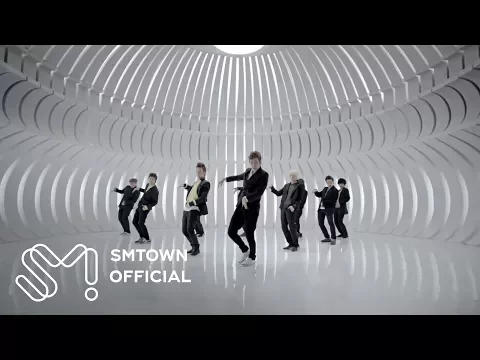 Mr. Simple MVMr. Simple carries the electronic run that followed and is the most addictive of the three.
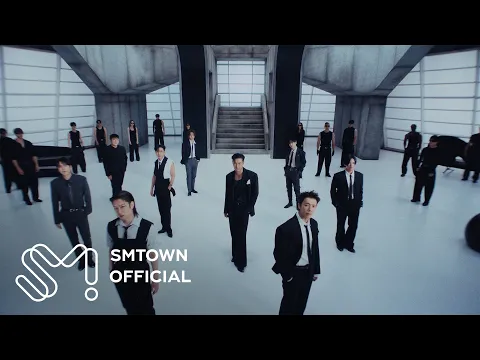 Express Mode MVExpress Mode is the anniversary title track and shows what 20 years of stage craft looks like.
MVView in JapaneseDance PracticeView in JapanesePerformanceView in JapaneseLiveView in JapaneseStageView in JapaneseAudioView in Japanese
View all official videos →05
From debut to now
- 2005Started as a central SM second-generation group with a large line-up and members working across several fields.
- 2009The signature image of a repeating hook and mass choreography settled, and the group had a large part in K-pop's spread abroad.
- 2011The addictive sound after Sorry, Sorry grew stronger and the staging of large formations was renewed.
- 2013The first Japanese full-length album Hero widened their presence in the Japanese market, pairing original Japanese songs with the Korean signature songs.
- 2017Around Black Suit a suited concept and a settled stage presence showed a long-running group renewing itself.
- 2021Around The Renaissance a bright pop direction brought out the approachability of a group with a long-standing fandom.
- 2025The anniversary album and Express Mode showed the performing of the current nine-member line-up.
06
Achievements
Key milestones
08
Solo and unit activities


10
Official links
Official social accounts and platforms
Shopping guide
Verified English shopping links are not yet available.
12
KPOP DISCOVER's Super Junior note
What anchors Super Junior is the repeating hook of a large line-up and a fandom that has held for two decades. SM Entertainment debuted the leading second-generation boy group in 2005, and the work today centres on nine members led by Leeteuk. The repeating hooks of Sorry, Sorry, Bonamana and Mr. Simple, carried by large formations, pushed the internationalisation of K-pop forward.
Moving on to Devil, Black Suit, House Party and Mango shows the appeal of a matured show act. The work in Japan matters as a separate axis through Hero, I THINK U and Star, and taking in the original Japanese songs, the unit and solo routes and the Tokyo Dome context makes the strength of a long-fandom group easy to understand.
Super Junior25 and Express Mode, both from 2025, are where the anniversary stands. Rather than stopping at the older signature songs, following through to the newest music videos and dance practices shows the performing and the staying power of the current line-up. Sorry, Sorry, then Mr. Simple, then Express Mode is the way in.
Editors' take Sorry, Sorry / Mr — Simple / Express Mode. Three songs cover the repeating hooks and two decades of staying power in a long-running SM second-generation group.
Trivia worth knowing
Name
Super Junior is a name built around members who were expected to work across singing, acting, hosting and variety television.
Fandom
Set against roughly 20 years of activity, the fandom name E.L.F. gains its full weight, and that long companionship became part of the history itself.
Unit
K.R.Y., D&E and L.S.S. are among the sub-units tracked separately from the parent group, so Super Junior has many strands of activity running beside the main line.
Japan
Hero, I THINK U and Star include Japanese originals and Japanese-language versions, so they need to be read apart from the Korean catalogue.
Videos
Beyond the music videos, the Dance Ver. clips, performance videos, Killing Voice sessions, comeback shows and music-programme stages together give a much fuller picture.
Where they stand now
From Express Mode onwards the music video, Dance Practice and official Mnet/M2 stages are all in place, so the 20th anniversary performances can be followed end to end.
13
Japan activity score
KPOP DISCOVER original metric
No. 40/ 241 groups
No. 40 of 241 groups with recorded activity in Japan (top 17%)
- 5Japanese releases
- 30Japan-related tracks
- 0Members from Japan
- 0Official Japanese accounts
The denominator is the 241 groups, out of 564 covered by KPOP DISCOVER, whose raw score reaches at least one point. The score adds 10 points per Japanese-market release, 3 per Japan-related track, 12 per member from Japan, and 8 per official Japanese account. Japanese-market releases carry the most weight because they are the most direct evidence of activity; related tracks add track-level detail; members from Japan stand for Japanese-language communication and continuity; official accounts stand for a permanent point of contact. The weights are an editorial judgement, not a statistical optimisation, and the ranking tracks release volume in Japan closely. Source: releases, tracks, members, and official links recorded by KPOP DISCOVER (updated 2026-10-24).
How this score is calculated →View in JapaneseFrequently asked questions
What defines Super Junior?
Leeteuk, Heechul, Yesung, Shindong, Eunhyuk, Donghae, Siwon, Ryeowook and Kyuhyun carry the group now, with sub-units and television work alongside the records.
Why should a new listener start with Super Junior?
Start here for the group that taught the industry how to build one act into an entire ecosystem.
Which songs should a new listener try first?
Start with Sorry, Sorry, Mr. Simple, Express Mode, then continue to the official video index.